Exploring Promising Career Paths After Matriculation in Pakistan
Navigate the crossroads of education and career with promising options after matriculation in Pakistan.
Written By
Kh. Muhavia
Matriculation in Pakistan marks an important milestone in a student's academic journey. After completing the Secondary School Certificate (SSC), students face an important decision: what should they study next, and which career path is right for them?
While many students continue their education through Intermediate programs such as FSc, ICS, I.Com, or FA, others may choose technical education, vocational training, or practical skill development. The best choice depends on a student's interests, academic strengths, financial circumstances, and long-term goals.
In this guide, we explore some of the best career options after Matric in Pakistan and the different pathways students can consider when planning their future.
Understanding Matriculation in Pakistan
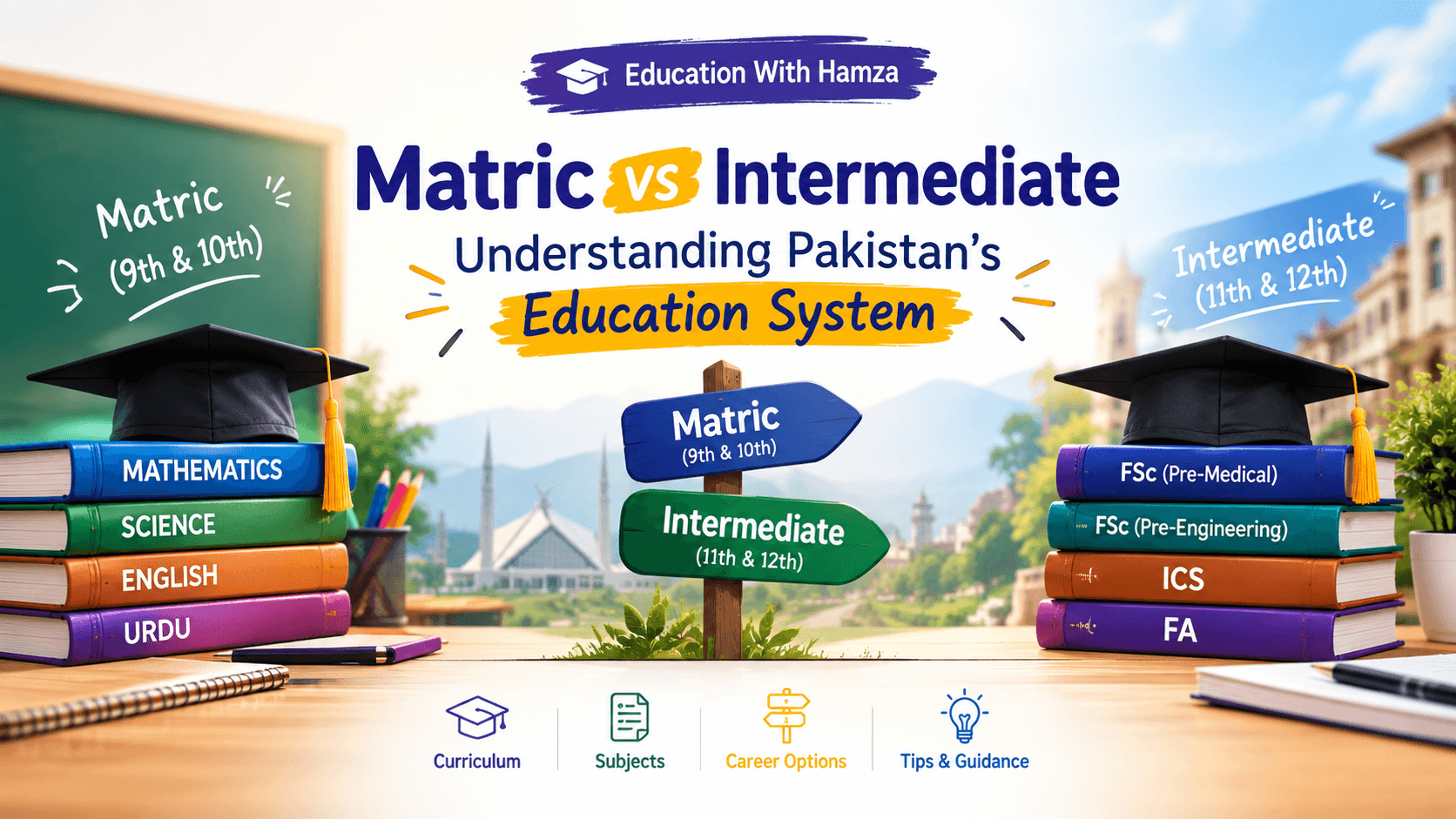
In Pakistan, Matric generally refers to the completion of Grades 9 and 10, after which students receive the Secondary School Certificate (SSC) through their respective educational board.
After Matric, students can choose from several educational and career pathways. The most common route is to continue with higher secondary education, but technical and vocational education can also provide valuable practical skills.
Important: There is no single "best" career after Matric. The right option is the one that matches your interests, abilities, educational goals, and future plans.
Top Career Options After Matric
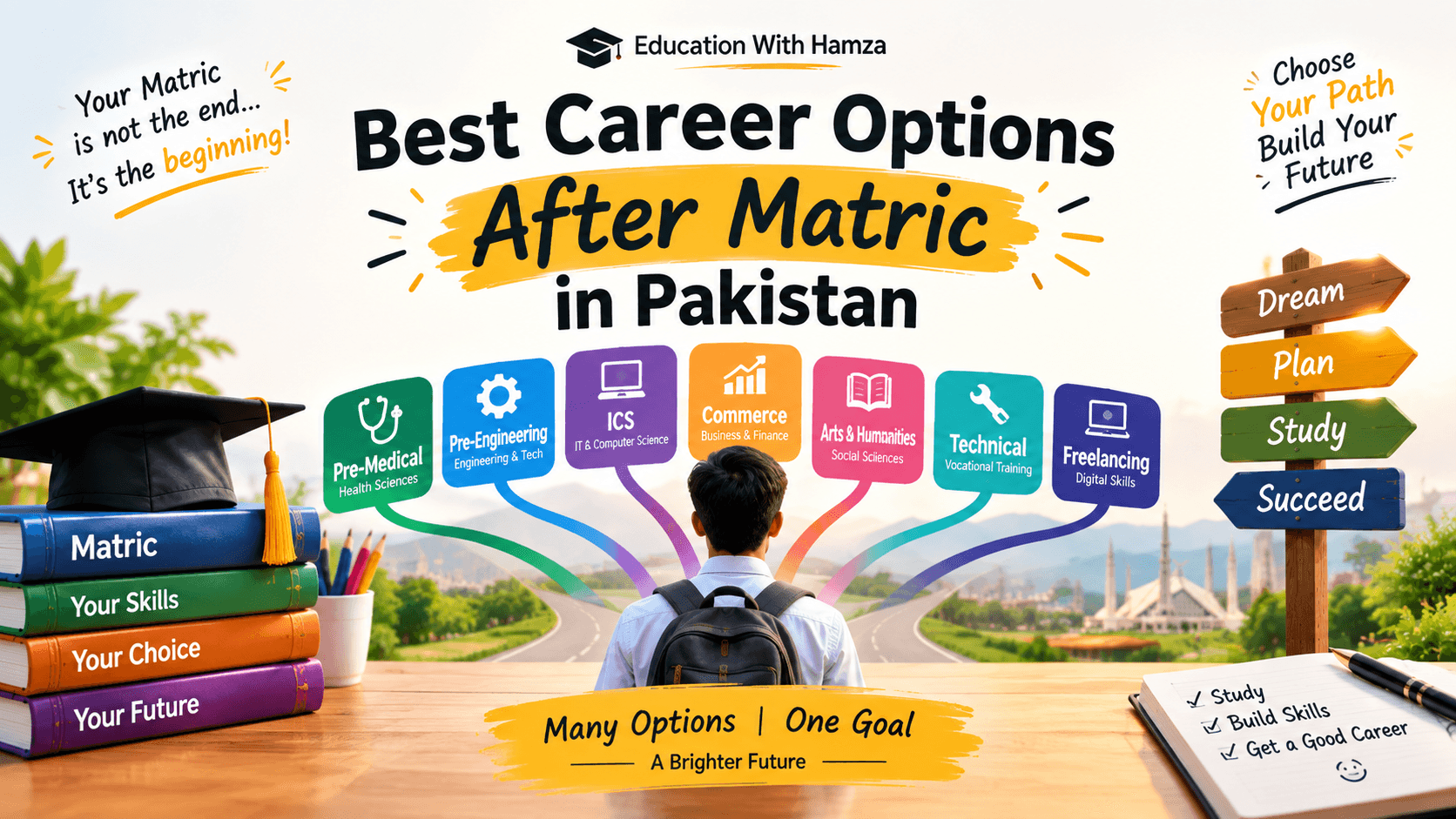
Students in Pakistan have a wide range of options after completing Matric. Some of the most useful pathways are discussed below.
1. Intermediate Education
Continuing with Intermediate is one of the most common choices after Matric, particularly for students who plan to attend university. Students can select a group according to their interests and future career plans.
Common options include:
- FSc Pre-Medical: Suitable for students interested in Biology, healthcare, medicine, and life sciences.
- FSc Pre-Engineering: Suitable for students interested in Mathematics, Physics, engineering, and technical fields.
- ICS: A popular pathway for students interested in Computer Science, programming, IT, and technology.
- I.Com: Focuses on accounting, commerce, finance, and business-related subjects.
- FA / Humanities: Suitable for students interested in languages, social sciences, humanities, education, and related areas.
Students can explore EWH 1st Year Resources for additional study material and preparation resources.
2. Technical and Vocational Education
Students who prefer practical and hands-on learning can consider technical and vocational education after Matric. These programs can help students develop specific skills for employment, further technical education, or entrepreneurship.
Depending on the institution and available programs, students may explore areas such as:
- Electrical Technology: Electrical installation, maintenance, and related technical skills.
- Automotive Technology: Vehicle maintenance, repair, and automotive systems.
- Mechanical Technology: Machinery, tools, manufacturing, and mechanical systems.
- Computer Hardware and Networking: Hardware installation, troubleshooting, and networking fundamentals.
- Vocational Trades: Various practical trades depending on the training institute and program.
Technical education can be a good choice for students who want to develop practical skills and enter the workforce or continue into advanced technical education.
3. Information Technology and Computer Science
Information Technology is another attractive field for students interested in computers and digital technology. Students can begin developing technology skills after Matric and continue their education through relevant Intermediate and university programs.
Popular areas include:
- Web Development
- Software Development
- Mobile App Development
- Cybersecurity
- Artificial Intelligence
- Data Analysis and Data Science
- Cloud Computing
- Information Technology
Career Tip: Students do not have to wait until university to start learning technology. Basic programming, web development, and other digital skills can be developed alongside formal education.
4. Arts, Design and Creative Fields
Students with creative interests can explore arts, design, media, and other creative fields. These areas can combine formal education with practical portfolios and digital skills.
Possible career directions include:
- Graphic Design: Designing visual content for businesses, websites, social media, and marketing.
- Fashion Design: Exploring clothing design, textiles, fashion production, and related creative areas.
- Fine Arts: Painting, drawing, sculpture, illustration, and other artistic disciplines.
- UI/UX Design: Designing user interfaces and digital experiences for websites and applications.
- Media and Content Creation: Video, photography, social media, and other digital creative work.
5. Business and Commerce
Students interested in business, accounting, finance, and entrepreneurship can choose a commerce-related educational pathway after Matric.
Career areas can include:
- Accounting: Building skills in bookkeeping, financial records, and accounting.
- Banking and Finance: Exploring financial services, banking, and investment-related careers.
- Business Management: Developing knowledge of management, operations, and organizational activities.
- Marketing: Learning how businesses promote products, services, and brands.
- Entrepreneurship: Developing the knowledge and skills required to start and manage a business.
6. Healthcare and Life Sciences
Students interested in healthcare and Biology can consider the Pre-Medical pathway and related educational programs. After completing the required qualifications, students can pursue different health and life-science careers.
Potential areas include:
- Medicine
- Dentistry
- Pharmacy
- Nursing
- Physiotherapy
- Medical Laboratory Sciences
- Nutrition and Dietetics
- Biological Sciences
Keep in Mind: Admission requirements and available programs vary by institution and profession. Students should check the current requirements of the institution or professional body before selecting a specific healthcare career.
7. Digital Skills and Freelancing
Students can also use their time after Matric to develop practical digital skills. These skills can complement formal education and may eventually support internships, freelance work, employment, or entrepreneurship.
Useful skills to learn include:
- Web Development
- Graphic Design
- Video Editing
- Content Writing
- Digital Marketing
- Programming
- UI/UX Design
- Computer and Office Skills
Developing these skills early can help students build practical experience while continuing their academic education.
Which Career Path Is Right for You?
Choosing a career should be based on more than salary or popularity. Students should consider their interests, strengths, preferred subjects, and the education required for their desired career.
| Your Interest | Possible Path |
|---|---|
| Biology and healthcare | Pre-Medical / Health Sciences |
| Mathematics and Physics | Pre-Engineering / Engineering |
| Computers and programming | ICS / Computer Science / IT |
| Business and accounting | I.Com / Commerce / Business |
| Languages and social sciences | FA / Humanities / Social Sciences |
| Practical and hands-on work | Technical / Vocational Education |
| Creativity and visual design | Design / Arts / Digital Creative Skills |
Things to Consider Before Choosing a Career
Choosing a career after Matric can feel overwhelming, especially when students hear different opinions from friends, relatives, and social media. Instead of following trends blindly, consider the following factors:
- Your Interests: Choose subjects and fields that genuinely interest you.
- Your Strengths: Consider the subjects and skills in which you perform well.
- Education Requirements: Research the qualifications required for your desired career.
- Future Opportunities: Consider the skills and qualifications that may be useful in your chosen field.
- Financial Considerations: Think about education costs and the resources available to you.
- Career Guidance: Talk to teachers, parents, counselors, or professionals before making a major decision.
- Avoid Peer Pressure: Your friend's career choice does not necessarily have to be yours.
Prepare for Your Next Step with Education With Hamza
A strong academic foundation can make it easier to move confidently into the next stage of education. Education With Hamza provides free educational resources designed to help Pakistani students with their board examinations and studies.
Students preparing for Matric can explore EWH 9th Class Resources and EWH 10th Class Resources for notes and study material.
After choosing an Intermediate pathway, students can also use EWH 1st Year Resources to continue their academic preparation.
Conclusion
There are many career options after Matric in Pakistan, ranging from Intermediate education and healthcare to Information Technology, business, design, and technical education. Students should not feel that they have to choose a single career immediately after Matric.
The most important step is to understand your interests and strengths, research the education requirements of different careers, and choose a pathway that keeps your future goals in mind.
Whether you plan to pursue university education, technical training, or practical digital skills, consistent learning and good planning can help you build a strong foundation for your future.
Keep Learning with EWH
Looking for free notes, study material, and board exam resources? Explore Education With Hamza and continue building your academic foundation.
Explore EWH ResourcesReader Reviews (1)
Areeba
Verified ReaderSep 7, 2026
“Great 👍 I ”